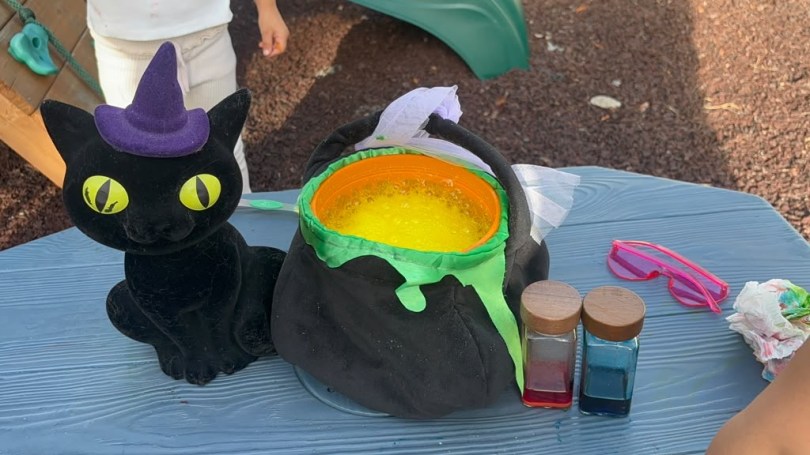
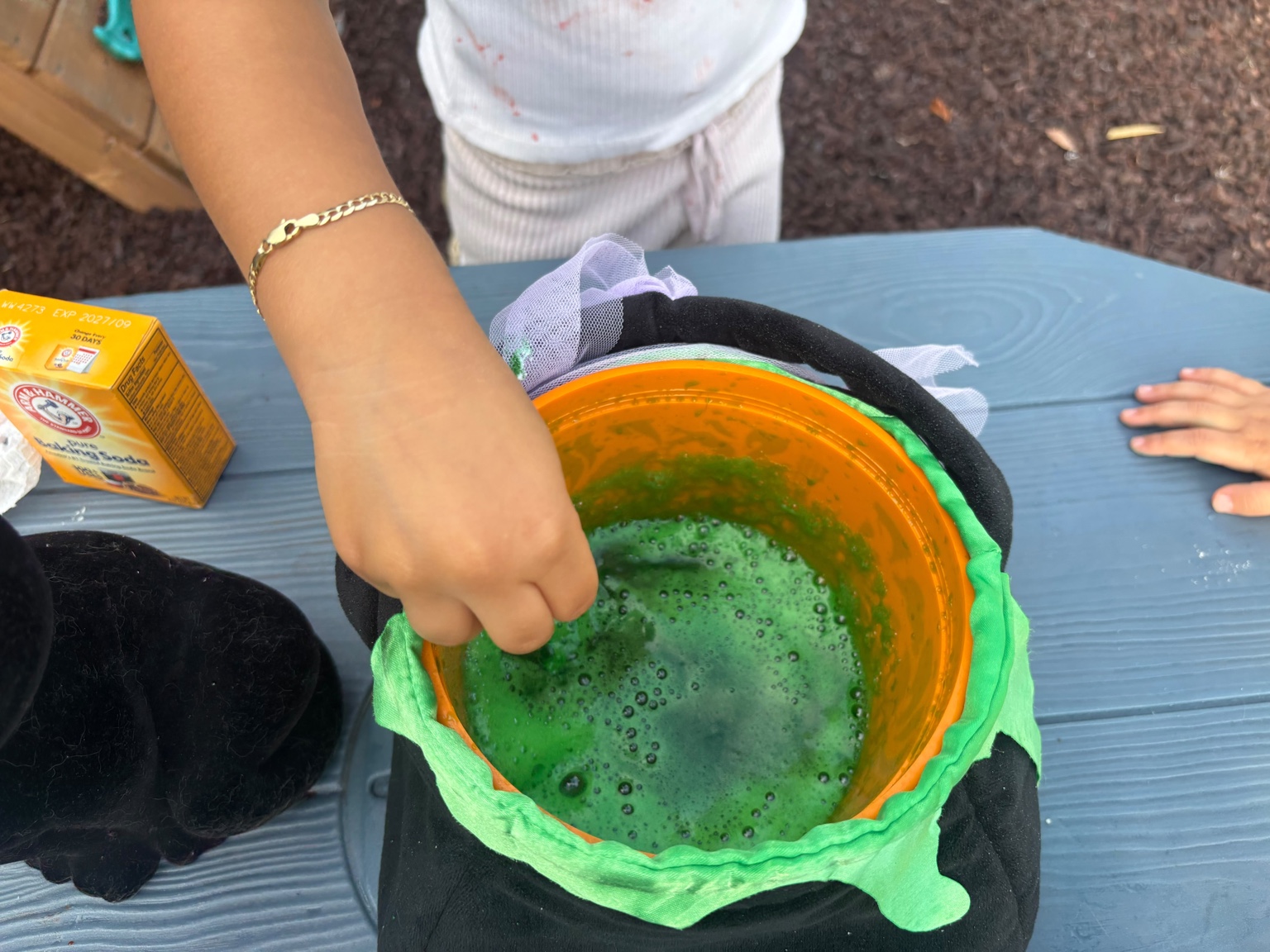
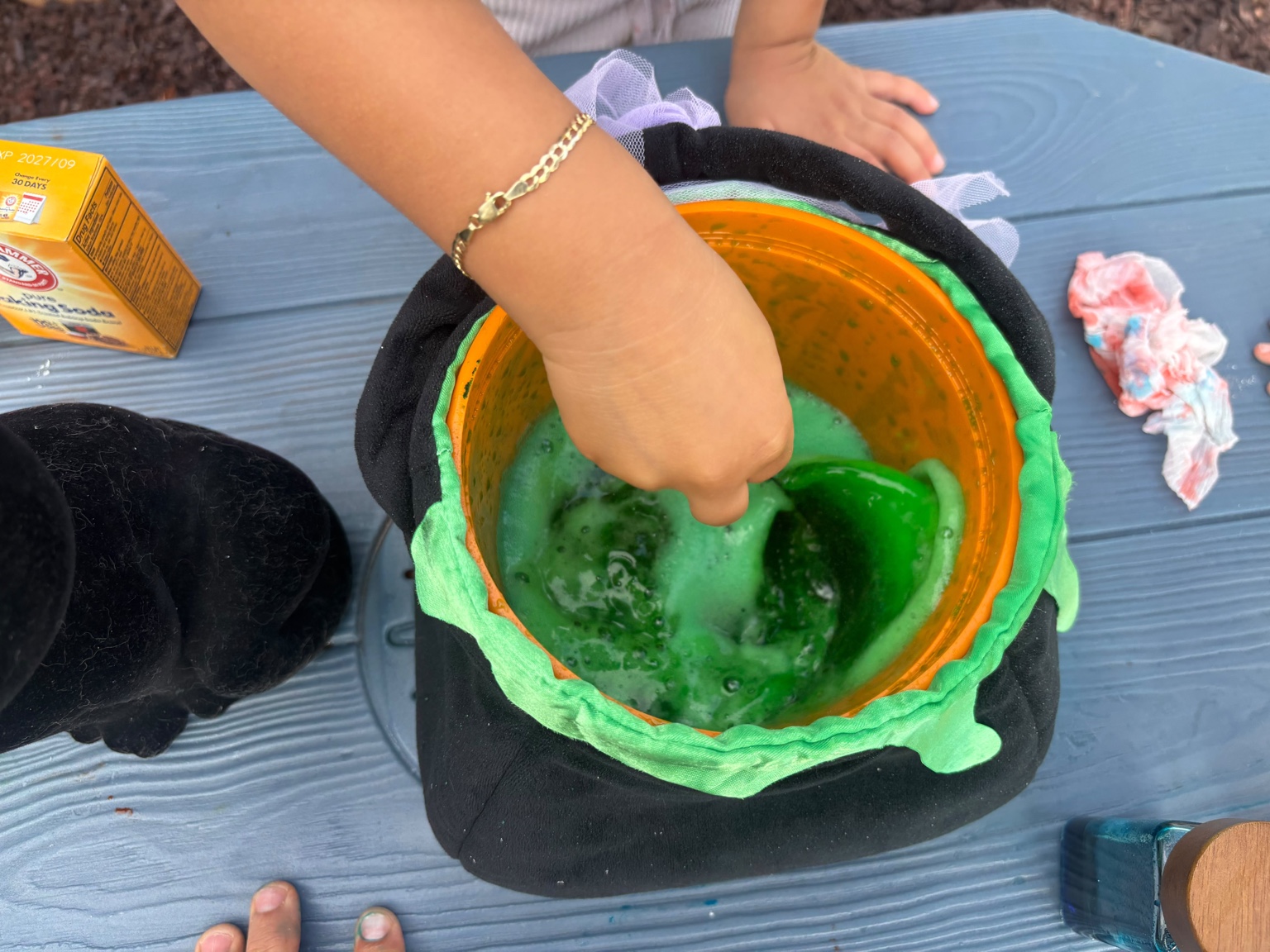
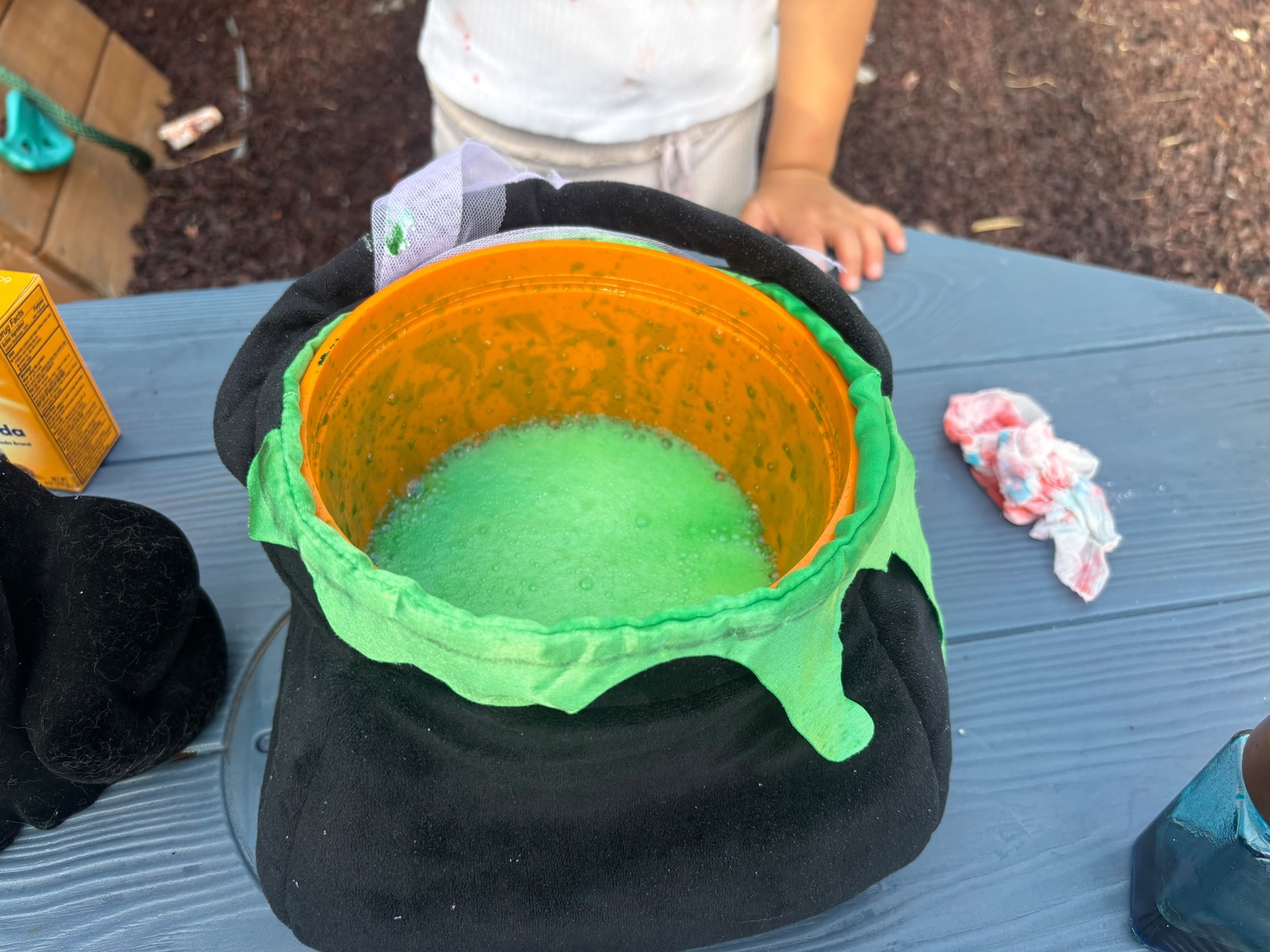
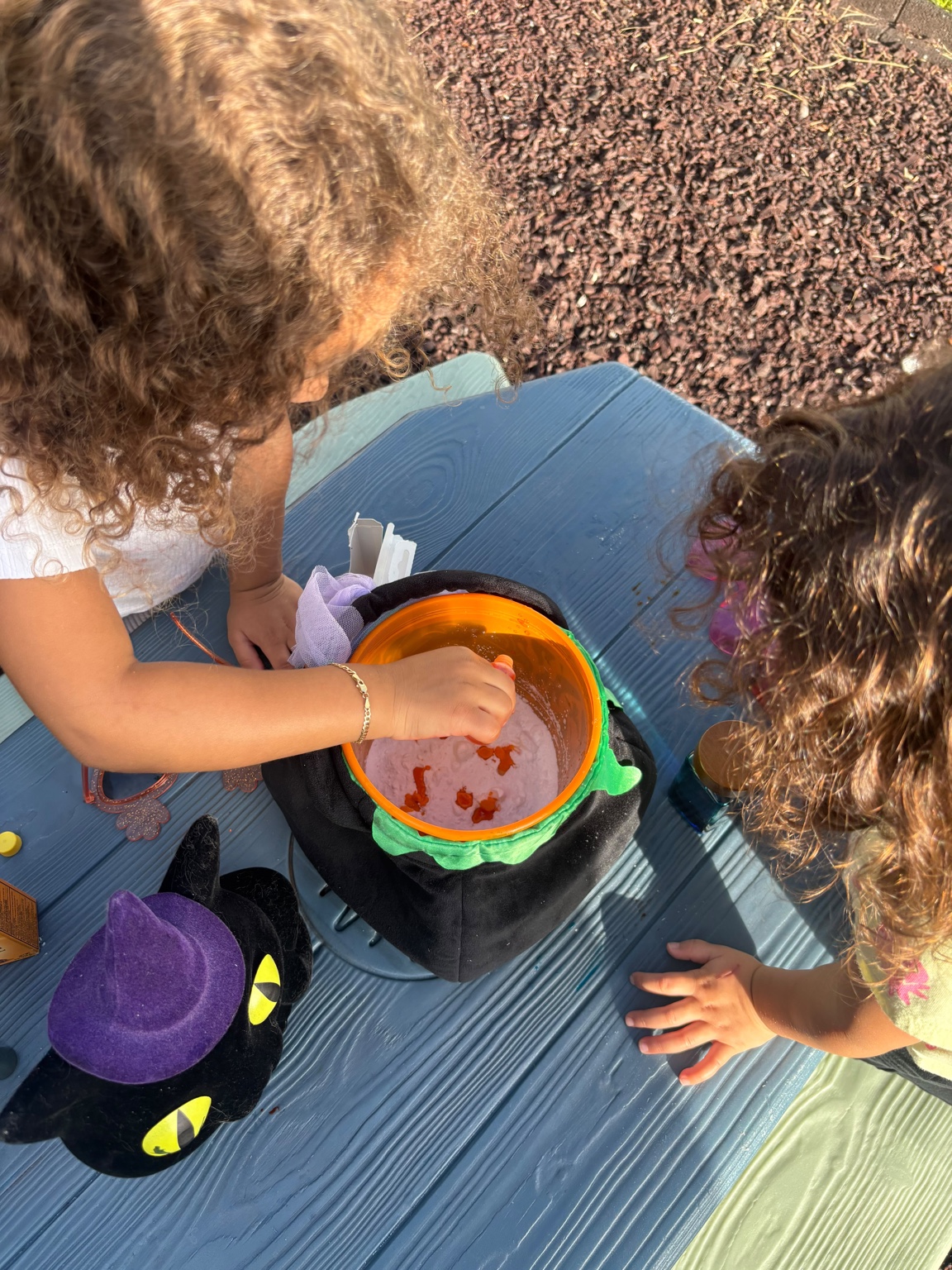
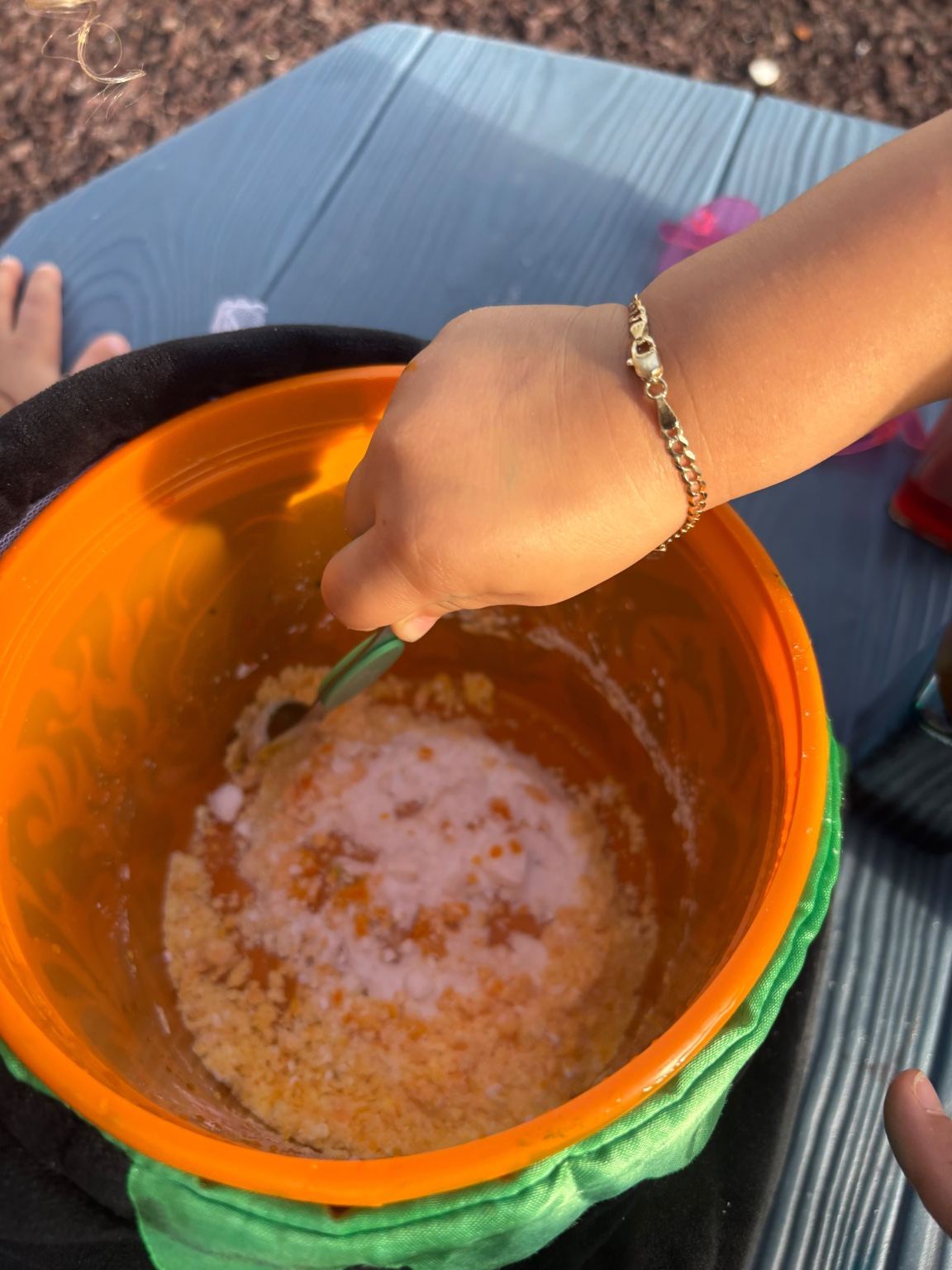
We brought a little Halloween magic into our homeschool science time with a bubbling witch’s brew! The girls mixed baking soda, vinegar, and food coloring in a cauldron, watched the fizzing reaction, and made blue potions too. It was messy, colorful, and a fun way to talk about what happens when ingredients react.
What you’ll need
- Baking soda
- White vinegar
- Food coloring
- A wide, open bowl or plastic cauldron with a removable washable inner container
- Spoons, a tray or outdoor table, and paper towels
- Water and a separate clear container for color-mixing potions
For a small batch, start with about 2 tablespoons of baking soda, a few drops of food coloring, and ¼ cup of vinegar. These are suggested starting amounts for recreating the activity, not measured quantities from our photos. Add the vinegar a little at a time, since the foam can rise quickly.
If you need food coloring for this activity, here’s the food coloring I linked. Disclosure: As an Amazon Associate, I earn from qualifying purchases.
How to make a bubbling witch’s brew
1. Set up the cauldron. Put the open container on a tray or an outdoor table. Add baking soda and a few drops of food coloring.
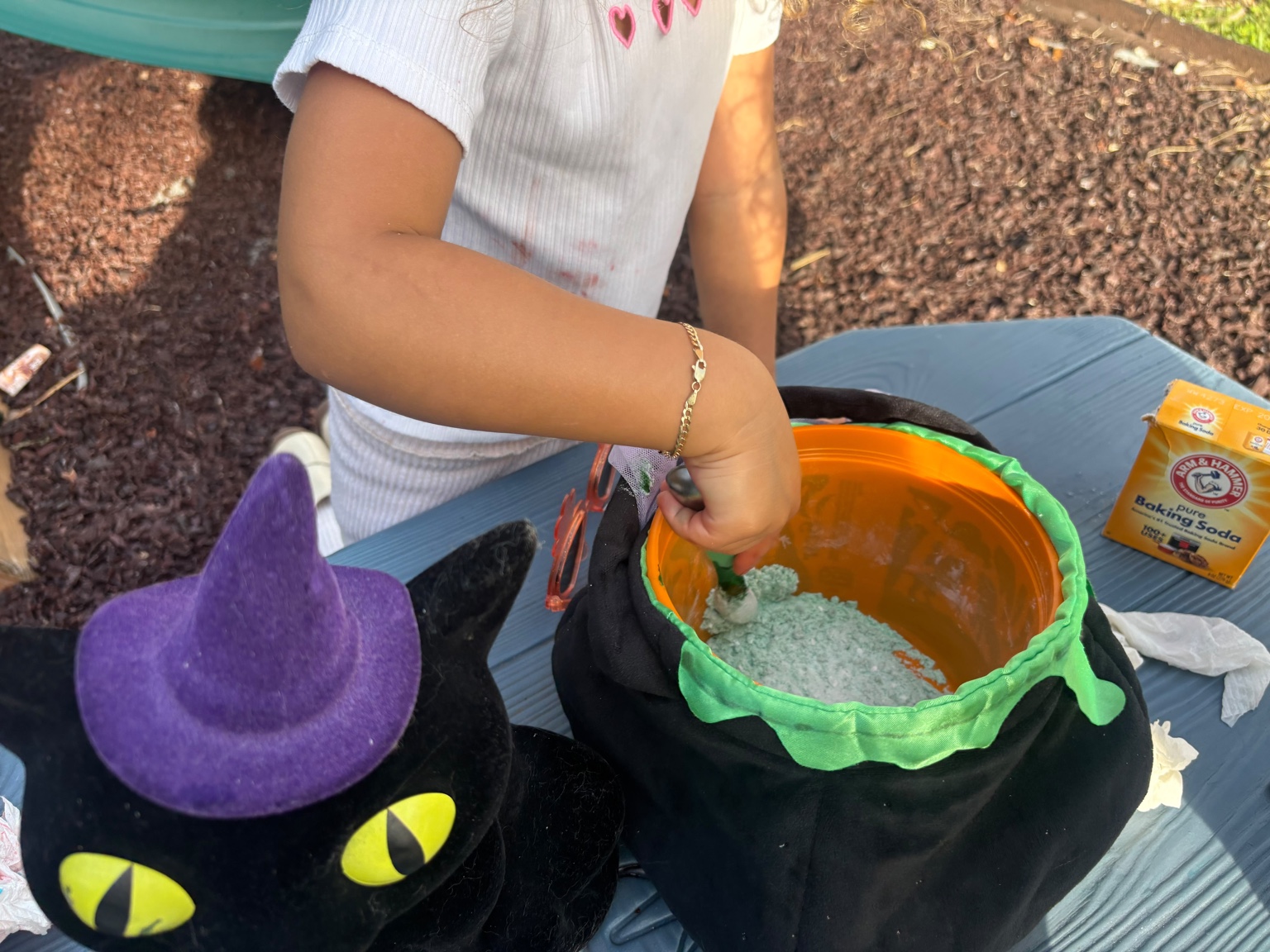
2. Add the vinegar. Slowly pour a little vinegar into the baking soda. Watch for bubbles and fizz! Let children observe what changes before adding more.
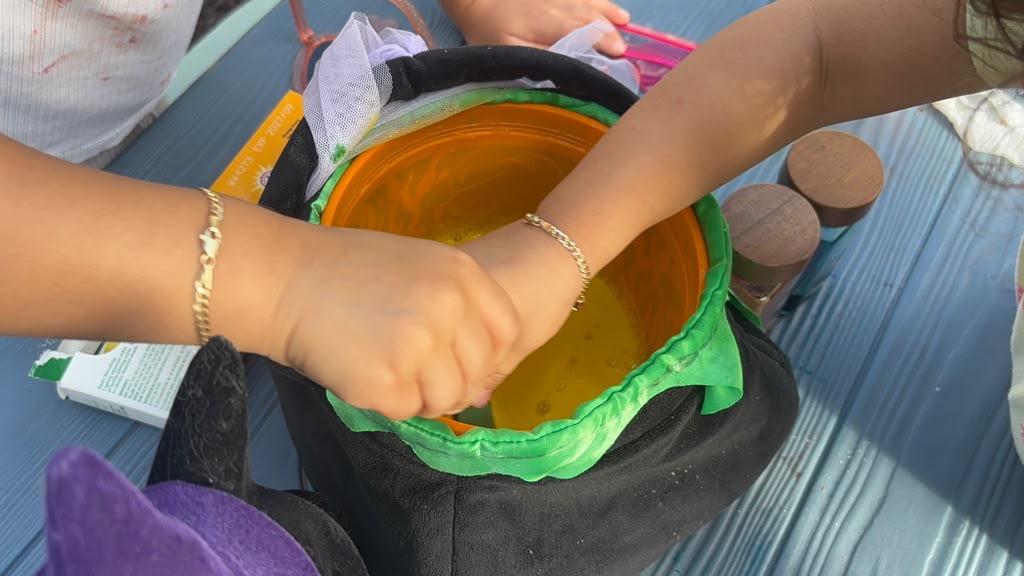
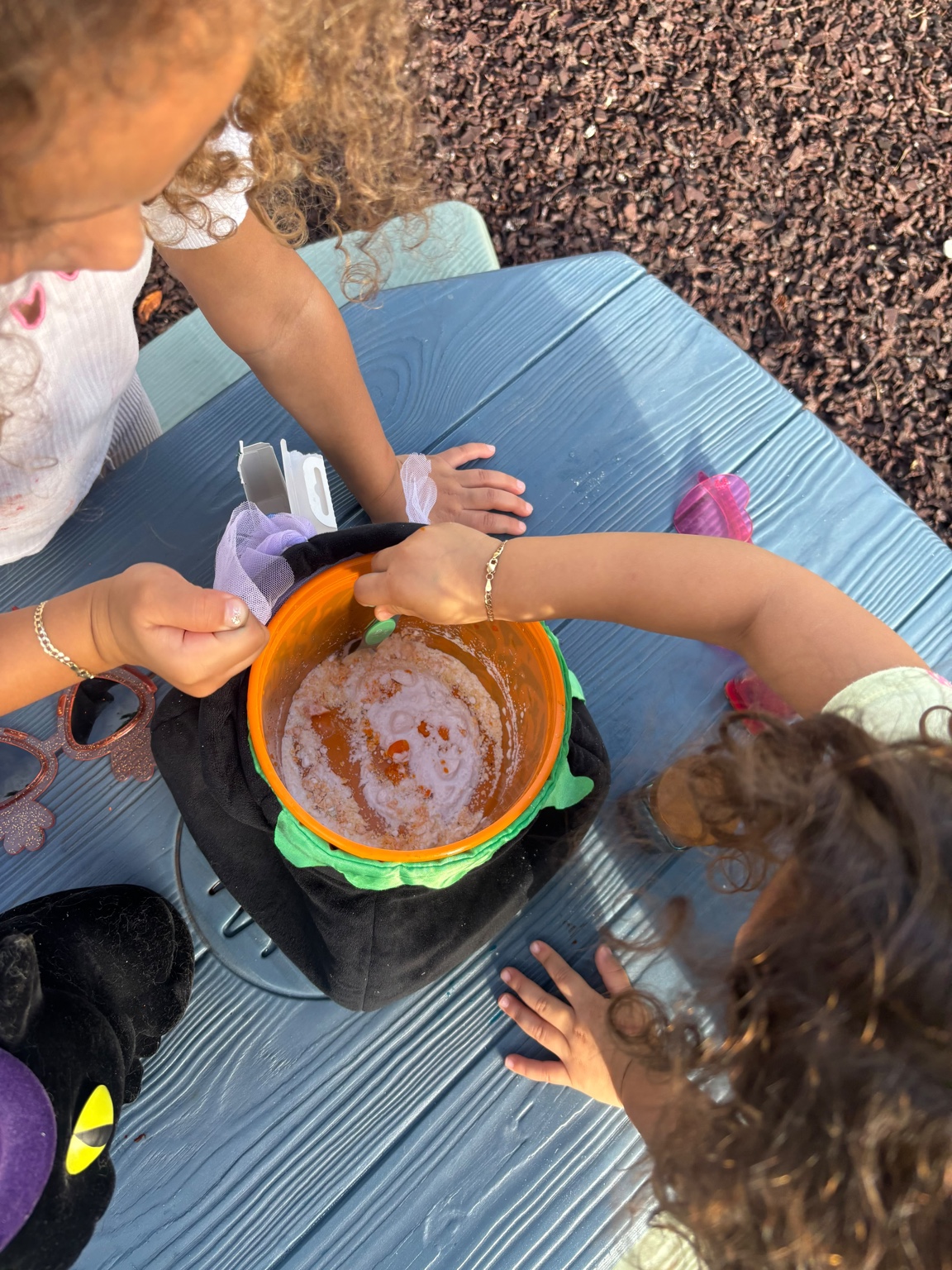
3. Stir and explore. With supervision, use a spoon to mix. Try a different food color and notice how the potion looks. The color changes are from the food coloring, while the bubbles come from the chemical reaction.
Our blue potion experiment
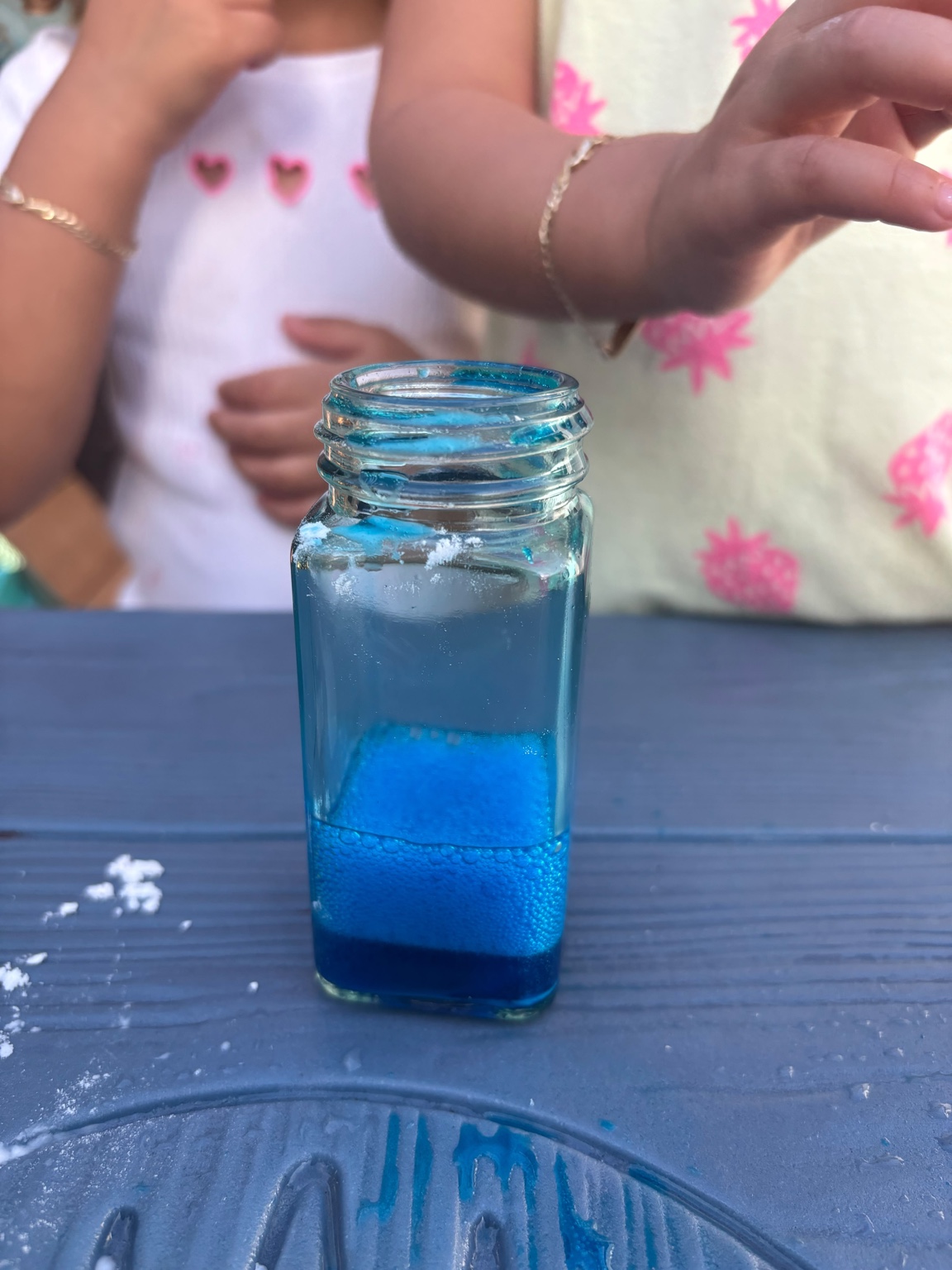
We also made a separate blue potion with food coloring. Adding color to water is a simple chance to observe how the color spreads through the liquid. It looks magical, even though it’s a different process from the bubbling baking soda-and-vinegar reaction.
The science behind the bubbles
Baking soda (sodium bicarbonate) and vinegar (which contains acetic acid) react when mixed. One of the products is carbon dioxide gas. As the gas escapes from the liquid, we see bubbles and foam. For preschoolers, you can keep it simple: “These two ingredients react and make a gas. The gas makes the bubbles!”
Try asking: “What do you think will happen when we add the vinegar?” “Where are the bubbles coming from?” “What changes when we add a different color?” There’s no need to get every answer right. Noticing, wondering, and trying things out are part of learning science.
What little learners practice
- Observation: Watching the mixture fizz, foam, and change color
- Prediction: Guessing what might happen when ingredients combine
- Vocabulary: Words like reaction, gas, bubbles, and mix
- Coordination: Scooping, pouring with help, and stirring
- Taking turns: Sharing tools and observing together
A quick safety note
Use only ordinary household baking soda, vinegar, water, and a small amount of food coloring. Keep the container open, supervise closely, and avoid splashes to eyes. The mixtures are for experimenting, not drinking. Don’t use bleach, household cleaners, or other chemicals, and don’t seal the reaction in a bottle or jar. Use unbreakable containers for young children and wash hands afterward.
A little Halloween science doesn’t have to be complicated. A few kitchen ingredients gave us a chance to watch a real chemical reaction and ask some great questions along the way. 🎃

