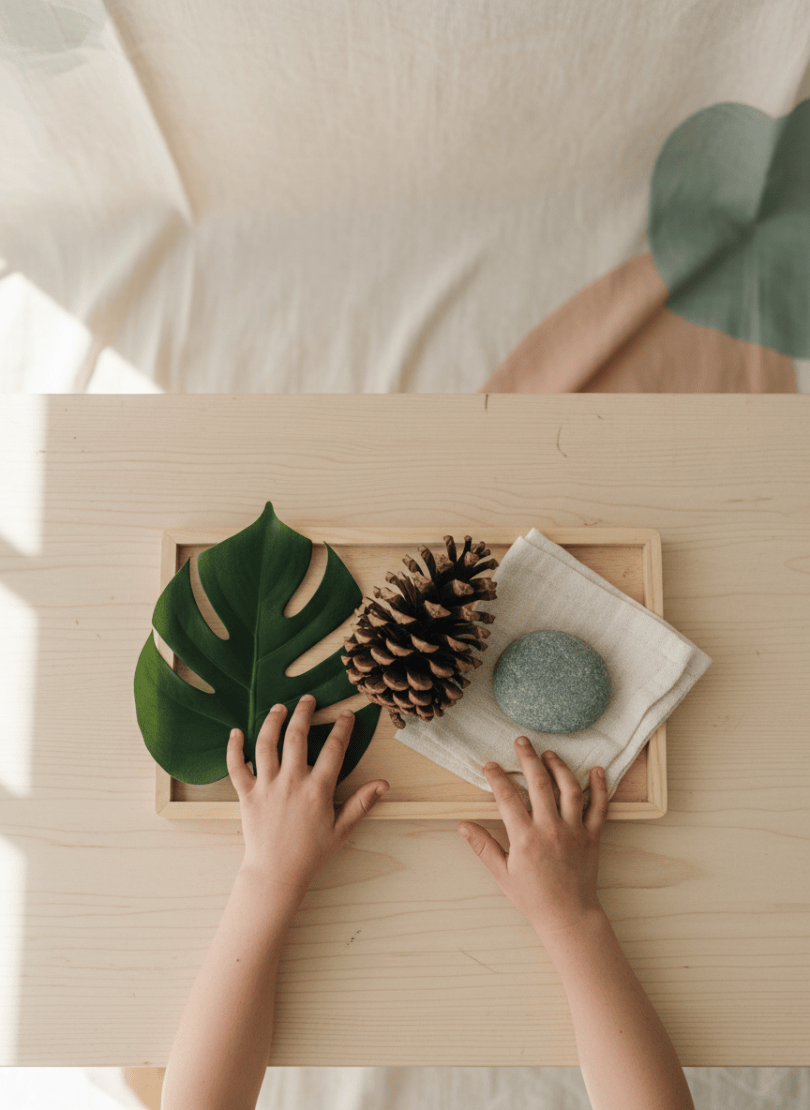
If you’re looking for an easy activity to do with your preschooler, try a nature texture hunt! It takes just a few minutes to set up, and you probably already have everything you need at home.
Grab a few things with different textures, like a smooth rock, a big leaf, or a soft washcloth. Set them out and let your child touch each one. Ask, “Does this feel soft or rough?” or “Can you find something that feels the same?”
It’s a simple way to practice new words, sorting, and noticing details. You can do it at the kitchen table or take it outside when you’re in the mood for some fresh air.
What you’ll need
- A small tray, basket, or towel to set everything on
- Four to six large, safe objects with different textures, like a big leaf, washcloth, sturdy piece of cardboard, large smooth stone, or fabric
- Paper and a chunky crayon, if you want to try a leaf rubbing afterward
- A small basket if you’re heading outdoors
Age and prep: This activity works well for many kids around ages 3 to 5. Give yourself about five minutes to set it up and 15 to 20 minutes to play, depending on your child’s interest. There’s no need to buy anything.
Don’t have a yard or want to stay inside? No problem. Try a sponge, towel, wooden spoon, cardboard, and a smooth plastic bowl. The activity works just as well with things from around the house.
How to set up the texture hunt
- Gather a few things. Pick four or five objects that feel different. Look for smooth, soft, rough, and bumpy textures. Give each item a quick check for sharp edges, splinters, or loose pieces before handing it over.
- Set up a discovery tray. Spread the objects out where your child can reach them. You don’t need to arrange anything perfectly. Just make sure everything is easy to see and touch.
- Let your child explore first. Try not to explain every object right away. Give them a minute to feel things. Then ask, “What does this one feel like?” Their answers might surprise you!
- Add a few new words. If they say something is “scratchy,” you can say, “Yes, it feels rough!” Compare it with something soft or smooth. Keep it casual. It doesn’t need to turn into a quiz.
- Try sorting. Put the soft things on one side and the rough things on the other. Or ask your child to find two objects that feel alike. If they put something in a different group than you would, ask what they’re noticing. They might have a good reason.
Want to make it a little more fun?
Go on a mini nature walk
Take your basket outside and look for different textures together. You might find a big leaf that feels smooth or some tree bark that feels rough. You can leave plants in place and still explore by looking and gently touching safe surfaces. It’s a nice excuse to get outside without planning a whole outing.
Make a texture checklist
Draw four boxes on paper and write soft, rough, smooth, and bumpy above them. Your child can draw what they found or put a checkmark in each box. If they aren’t interested in paper that day, skip it! The hands-on part is enough.
Try a leaf rubbing
Place a large, flat leaf under a sheet of paper. Show your child how to rub the side of a crayon over the paper to see the leaf’s shape and veins appear. You might need to hold the paper still for them. This is a fun little extra, but it’s totally optional.
Play a guessing game
Have your child close their eyes only if they’re comfortable doing so, then describe an object instead of naming it. “This one is soft and you can fold it.” Can they guess the washcloth? Then let them give you a clue. Silly descriptions are welcome.
A few safety tips
- Stay close and supervise the whole time. Small stones, seeds, beads, and other loose pieces can be choking hazards, especially if a younger sibling joins in.
- Use only large objects that won’t easily break apart. Skip anything sharp or splintery, and avoid unknown plants, mushrooms, berries, and irritating leaves.
- Wash hands after outdoor play. Check your space for insects, heat, and anything else that might make it unsafe.
- If your child doesn’t want to touch a certain texture, that’s fine. Let them point, describe it, or use a spoon instead. You don’t need to push it.
Change it up next time
You can switch out a few items each time you do this activity. Try a soft sweater, a textured placemat, or a smooth wooden block. Let your child choose what goes on the tray, too.
And don’t worry if they don’t sort everything perfectly or lose interest after five minutes. That’s okay. Let them explore at their own pace and see what catches their attention.
Looking for another easy idea? Take a peek at our DIY homeschool activities.

